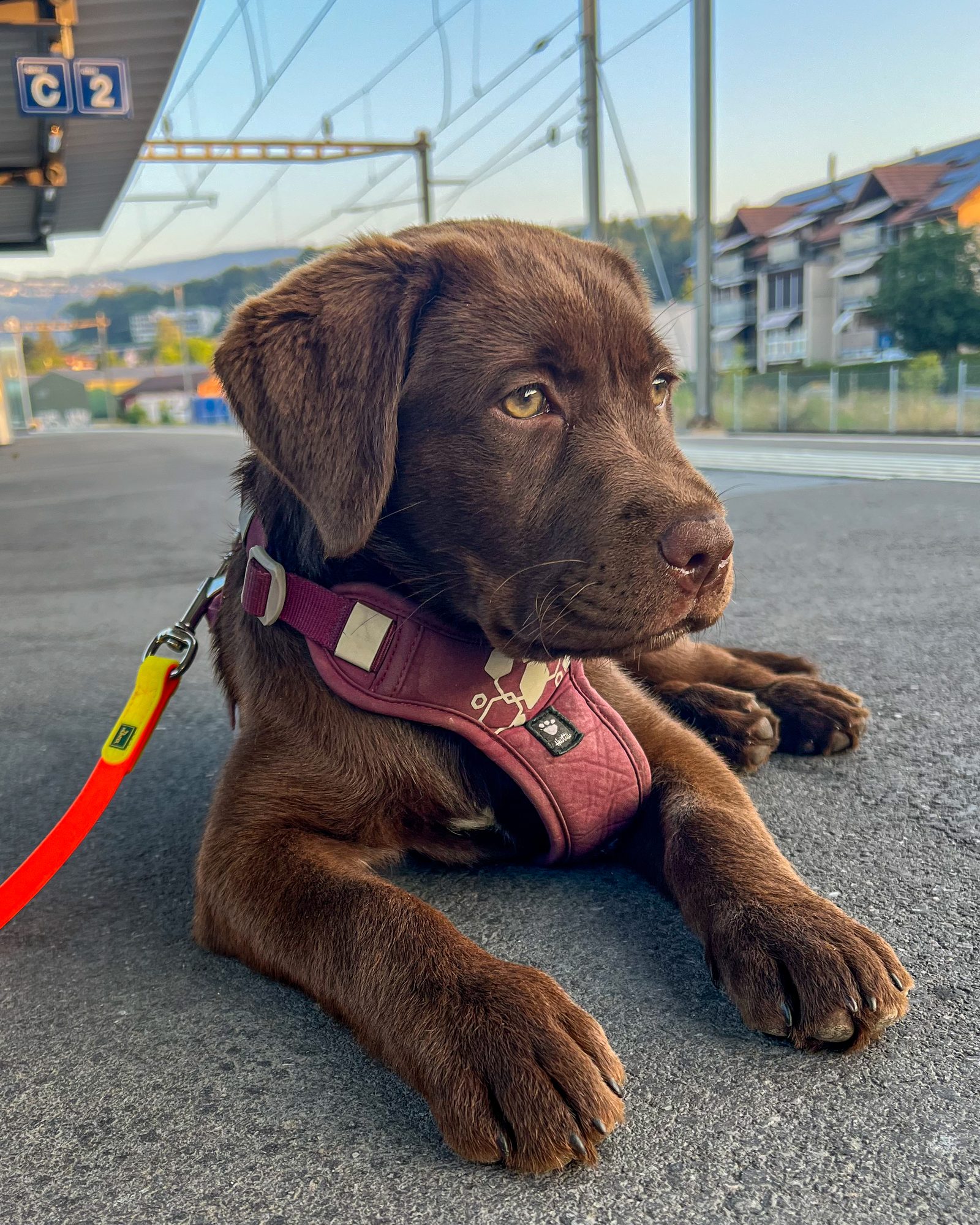
Bringing your dog to work: what I've learned
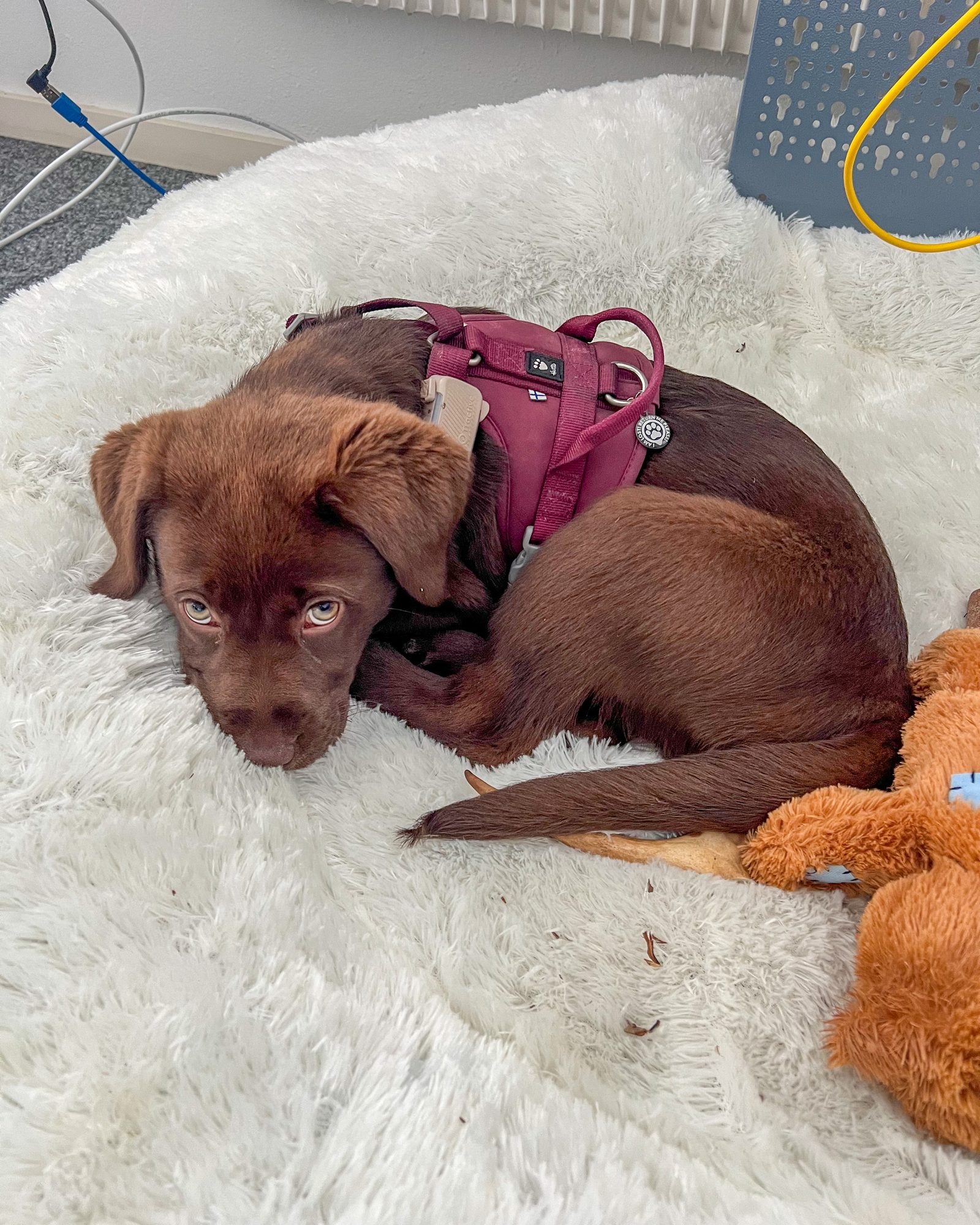
You can have a dog without leaving them alone at home all day, if you can bring them to work. Here's my experience with Jaina, who has come to the office with me since she was a puppy.
A quick note: I'm lucky enough to have a job where I work from home part of the week and spend the rest in a quiet office, with colleagues in the neighbouring offices. So not everything I describe here will apply to every workplace.
Step 1: talk to your boss (before you get the dog)
For me, this was a condition for getting Jaina. I went to my boss and said: "I'd like to get a dog, but I don't want it to stay at home all the time. Could I bring it to the office?"
If your boss takes some convincing:
- lean on serious sources. In Switzerland, for example, the Swiss Kennel Club (SKG) has published guidance on dogs at work. They're the professionals, so I'll point you to them rather than reinvent their advice;
- prepare your arguments. Unless a colleague is afraid of dogs, a dog in the office brings calm, variety and a good mood, and it can even boost productivity. Although, to be honest, it does take some time to feed them and take them out, especially when they're small.
And if the answer is a flat no, you'll need to think about another solution for your dog… or another job, even if the job market isn't always easy.
Step 2: give your colleagues a heads-up
Talk to your colleagues: "I'm probably getting a dog, the boss is fine with it. Is that a problem for you?" If someone doesn't like dogs, it doesn't mean you have to give up. But you'll know in advance how people will react, and you can plan around it.
Step 3: prepare your dog
All the usual puppy socialisation
Do everything you'd do with any puppy: meet dogs and people, play together, work on house training. Everything that will make them a calm dog, wherever they are.
A commute that doesn't start with a battle
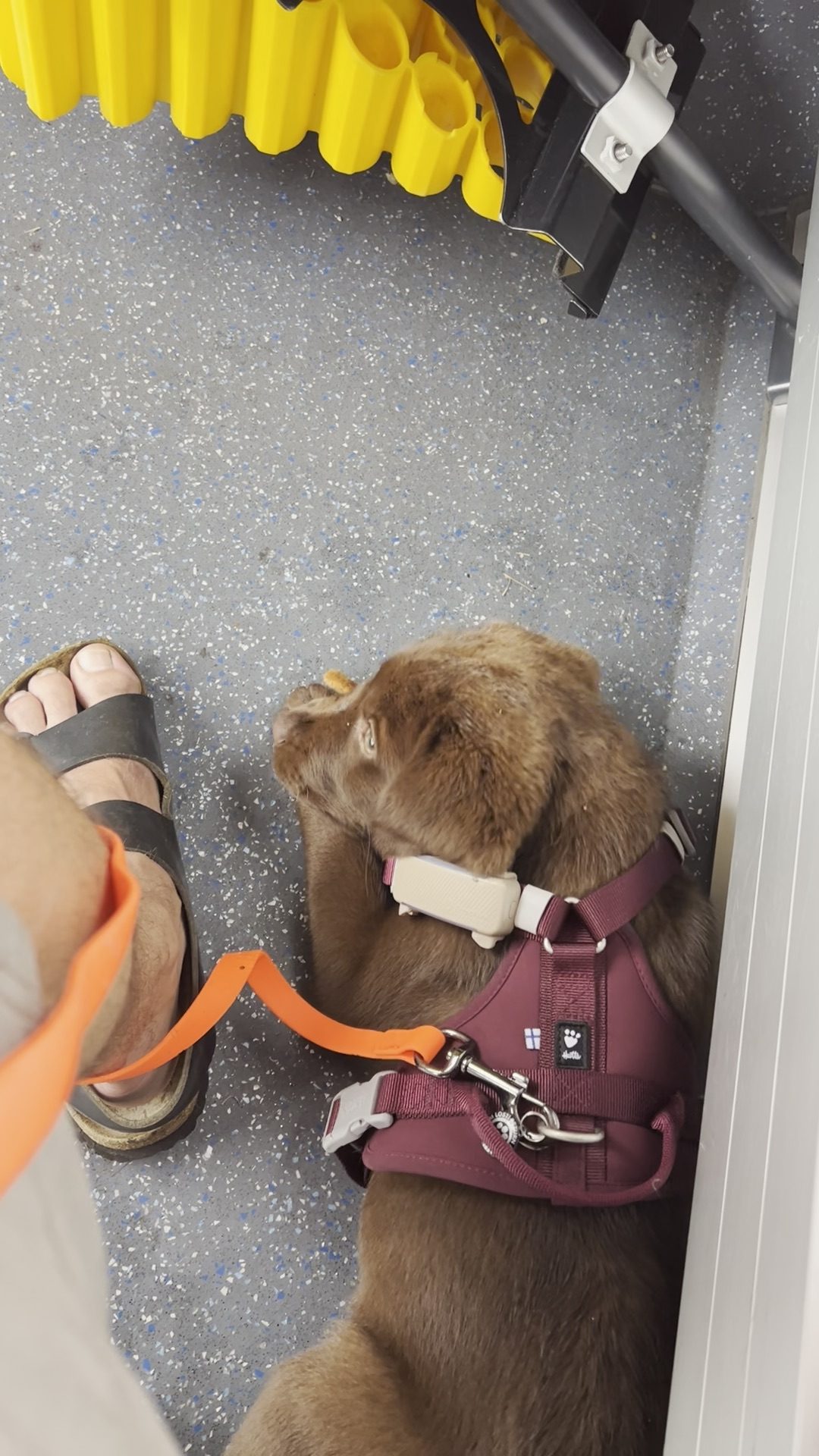
Whether you get to work by train, bus or car, your dog needs to be comfortable with it. Otherwise your day starts with a fight to get them on the bus or stop them howling.
I even changed my commute. I used to take a bus, then a train, then another bus. It's doable, but not much fun for a dog. Now:
- I walk about twenty minutes to the station;
- we take the train;
- at the other end there's about ten minutes on foot, and I'm lucky to have woods along the way, where we play for 10 to 15 minutes (adapt to your dog's age).
The idea: when we reach the office, Jaina has walked, played and done her business. She's done everything a young dog wants to do, and now she's going to sleep.
At the office: a balanced dog sleeps
You'll see: a well-balanced dog will simply sleep at the office. Watching people at computers isn't exactly thrilling.
My routine:
- breakfast at the office. I bring her food from home and feed her when we arrive. Often, five minutes after eating, a puppy is asleep;
- a water bowl, always available;
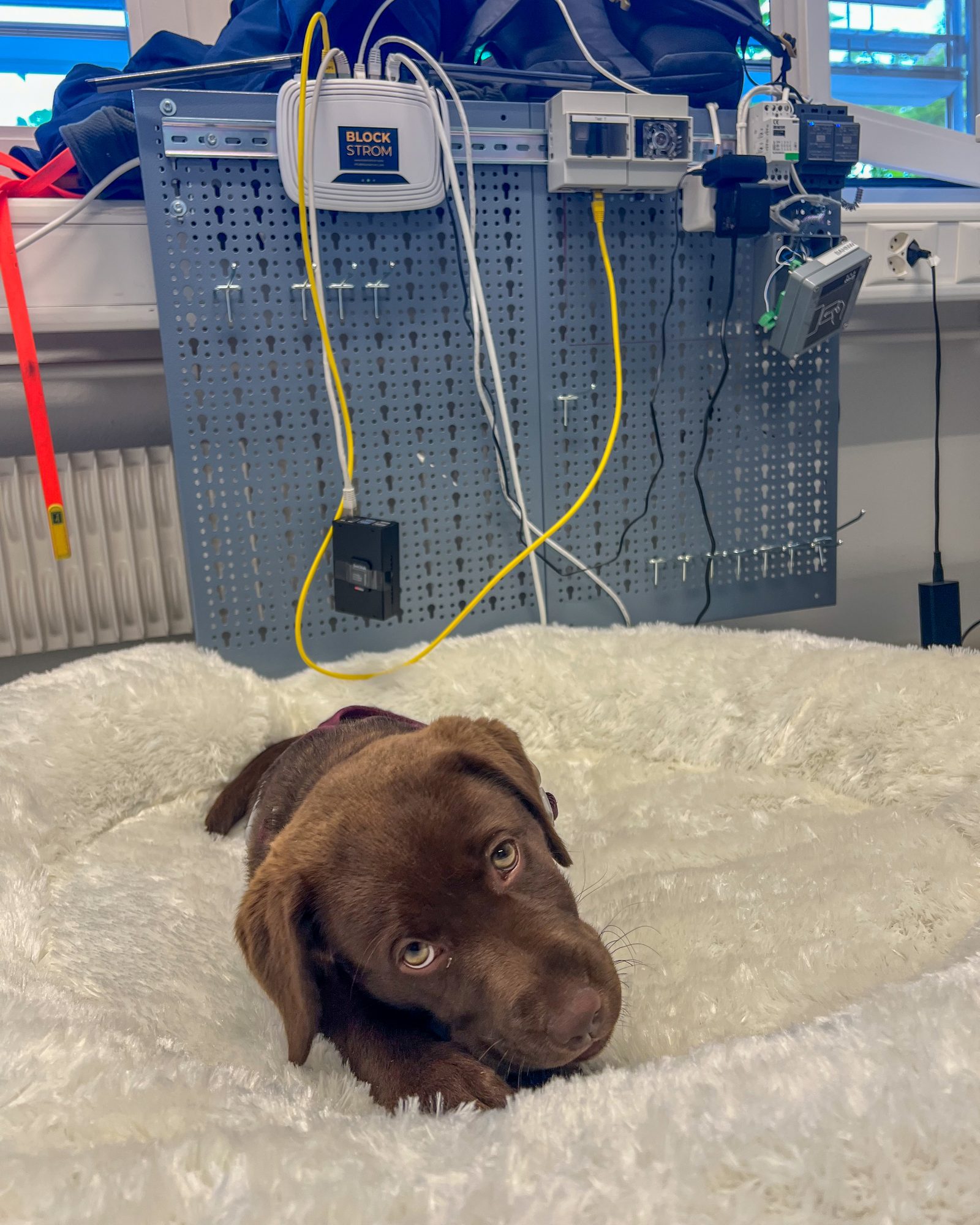
- her own spot near my desk, where she can see me and what's going on, with a big bed, toys, things to chew and a few small sticks. If she gets bored, she can move around, chew or play.
Introduce your dog to colleagues… normally
I introduced Jaina to all my colleagues. Of course everyone melted: a baby dog is always adorable.
But with the colleagues you're closest to, try to keep things as normal as possible. You work together, you work normally, no big ceremony. Your dog thinks: "OK, this is normal, they're a friend." Little by little you'll see the change: these days I can even leave Jaina alone with my colleagues, and it goes perfectly.
The hardest part: toilet breaks
With a puppy, you need to go out every hour, sometimes more. Again, agree on this with your boss. I'm lucky to have quite a lot of freedom in how I work, so I can go out whenever I sense she needs to.
But be honest: it does take time out of your day. I compensate, for example, by logging fewer hours than I actually work.
At lunchtime, I stay out a bit longer: sometimes five minutes, sometimes ten, and when I can see she's had enough of the office, we go for a half-hour walk. Plan your lunch breaks around your dog. If they've had enough exercise and a varied day, they'll be really relaxed. And Jaina knows that after work we'll go and play in the woods and walk for even longer, so she isn't frustrated about being at the office.
What if your dog barks?
This is one area where I can't give advice from experience, because Jaina doesn't bark at the office. A dog can bark for lots of reasons: it isn't used to the place, there are new smells, someone walks past the door… Be careful, because it can quickly get on everyone's nerves.
If you're still choosing a breed, bear in mind that some dogs are more prone to barking or guarding. Some herding breeds, for example, bark more readily every time someone walks past the door, which makes them a little less suited to office life.
Four months in
Jaina has been coming to the office with me for four months now, and everyone is happy to have a little dog around. Colleagues bring her treats, and she sometimes spends time in someone else's office. We even have meetings with 10 or 12 people around a table: she says hello to everyone, then dozes off. Meetings are boring enough for us, so imagine for her…
If you have the chance to bring your dog to work, go for it. Everything gets easier: no need to find someone to look after your dog, and those first, often tricky weeks go much more smoothly.
My most important tip: take time off at the start
When Jaina came home at two months and three days old, I stayed home with her for about three and a half weeks before going back to the office. Not entirely without working: I work in the electrical trade, so we even went to a small job site together!
That time let us get used to each other and do everything: meet dogs and people, take the bus, take the train, go into shops. As a result, even as a baby she was already used to lots of things. And compared with all that, an office is one of the most boring places on earth. So she does the only logical thing: she sleeps.
How Quest.Dog helps you vary your breaks with your dog
The secret to a calm dog at the office is a varied day around it. With Quest.Dog, the app I built, you'll find ideas for outings around you, whether near home or near work. And with the loop planner, you can generate a walk that fits your lunch break, passing through places you haven't explored yet.
Quest.Dog is available on the App Store: search for "Quest.Dog". On Android, the app is still in beta. Leave your email on quest.dog to get access.
FAQ
How do you convince your boss to allow a dog at work?
Bring it up before you get the dog, point to serious guidance such as the Swiss Kennel Club's, and highlight the calm and good atmosphere a dog brings. Be upfront about the time needed for toilet breaks too.
At what age can you bring a puppy to work?
Once they've settled into their new life a little. I stayed home with Jaina for about three and a half weeks before bringing her to the office, to socialise her and get her used to public transport.
How do you keep your dog calm at the office?
Tire them out before you arrive (walk, play, toilet), feed them at the office and set up a comfortable spot with water and things to chew. A well-balanced dog sleeps most of the time.
Which breeds are less suited to the office?
Dogs prone to barking or guarding, such as some herding breeds, can be harder in an office. But every dog is different.