Taking your dog on the bus: a step-by-step guide
Taking the bus or the train with your dog sounds easy. But for a puppy discovering the world, it's a huge deal: an enormous vehicle pulling up with a hiss, doors banging, people, noise, unfamiliar smells. With the right preparation, though, it becomes a routine your dog will find completely normal.
I'm neither a dog trainer nor a vet. What I'm sharing here is the experience of someone who got his dog used to buses and trains, inspired by what I've learned from people like the French trainers at Esprit Dog, whose approach to dog behaviour I really like. Every dog is different, and so is every size of dog: adapt this to yours.
Step 1: show your puppy buses from the outside
Before getting on a bus, your puppy needs to learn to watch one go by without panicking. They've usually already been in a car on the day you picked them up. But watching a bus arrive from the outside is something else: the size, the engine noise, the hiss of the doors.
- Pick a quiet road, not the side of a motorway, and a time of day with little traffic. The idea is to avoid a big shock the very first time.
- Stay a few minutes. There's no need to spend three hours at the roadside.
- Let them watch, sniff and listen. The more familiar these sounds and smells are, the less surprised they'll be on the day they climb aboard.
The earlier you start, the more normal it will feel to them.
Step 2: the first ride, just one stop
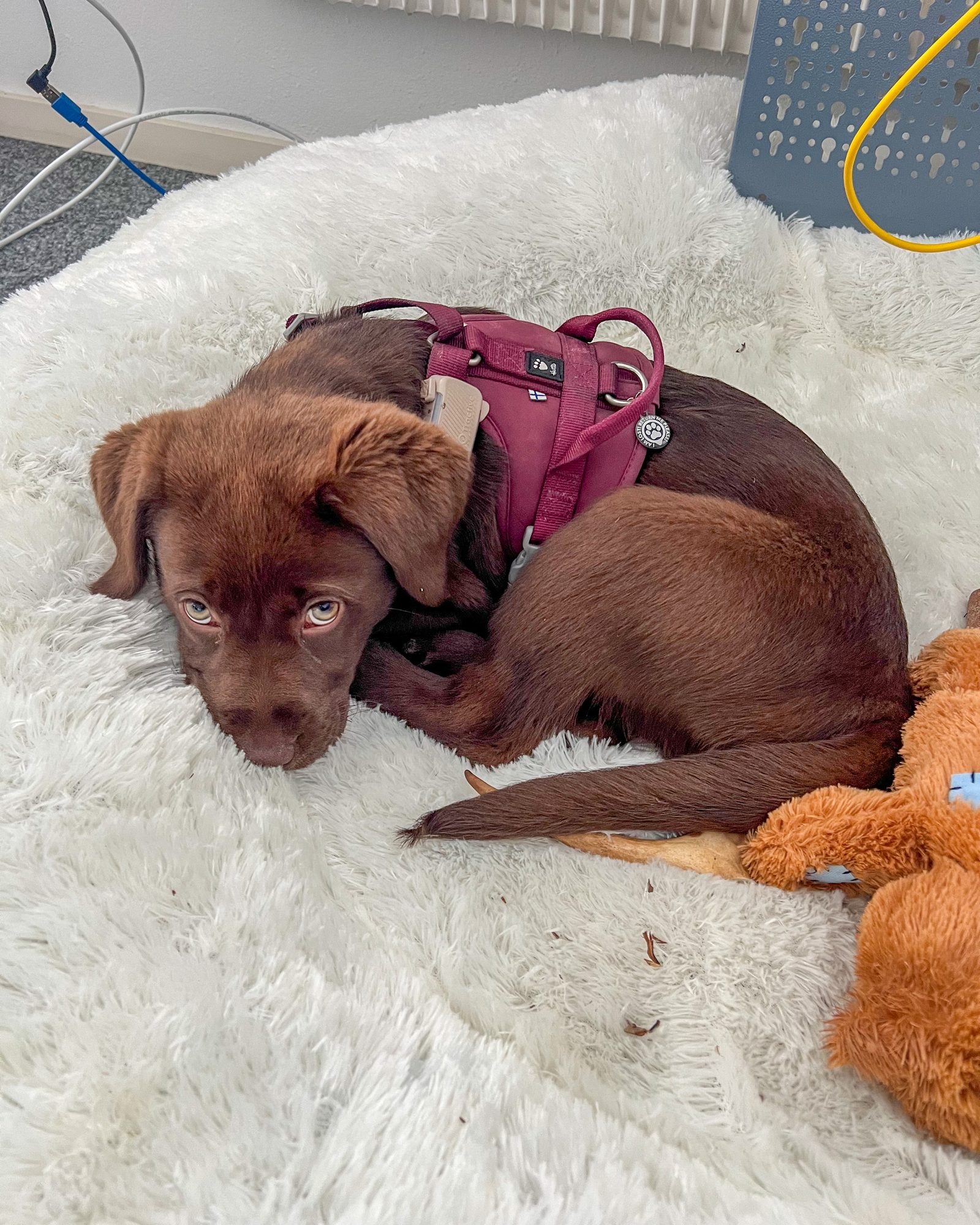
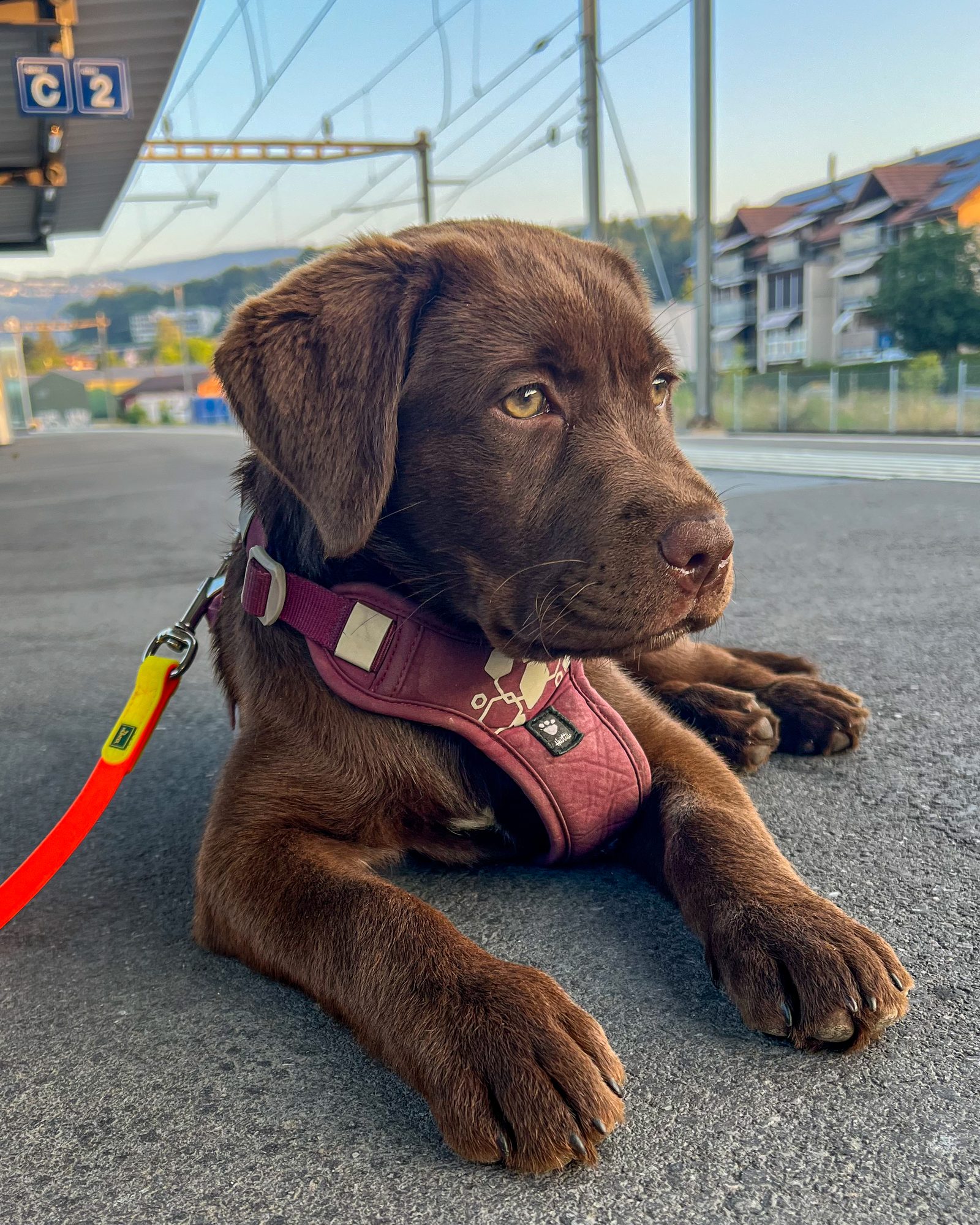
With Jaina, our Labrador, we took the bus for the first time a week after she came home. She was about two months and one week old.
We kept it simple:
- in our small village, not in the middle of town;
- at an off-peak time, when the bus was nearly empty;
- at a moment when we were relaxed ourselves, with no appointment and no pressure.
We stood at the bus stop and waited calmly. That's where it all happens: if you're stressed, your dog will be too. If you're calm, they'll think: "OK, my human is relaxed, so this isn't a big deal. I'm with them, everything's fine."
The bus pulls in, it stops, you get on. And there's no need to ride 40 stops or take a full tour of town. One stop, five minutes, and off you get. Your dog will have learned that this big noisy thing takes them somewhere nice. Mission accomplished.
During the ride: space, a toy, and lots of praise
You don't necessarily need a mat or a crate
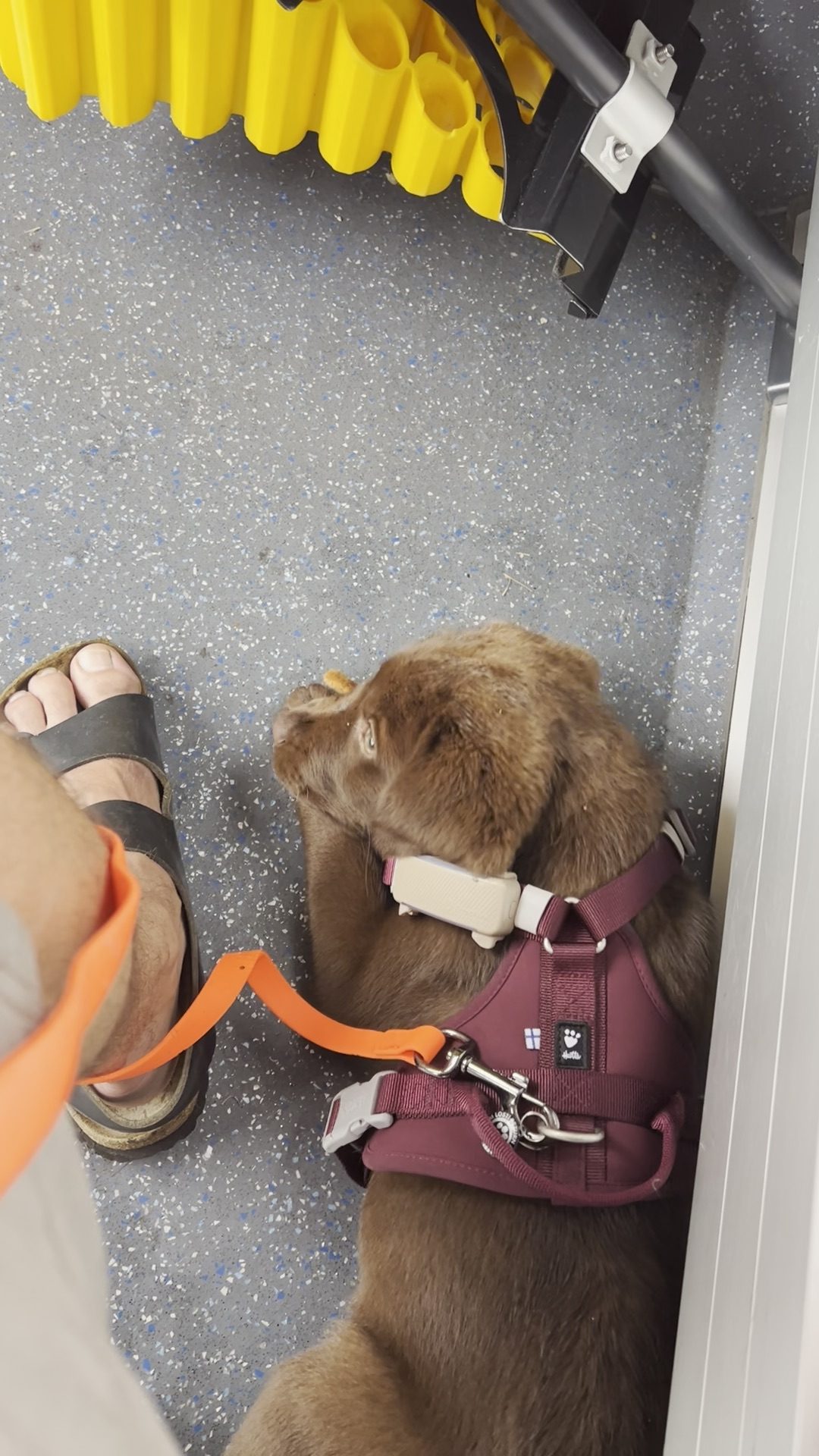
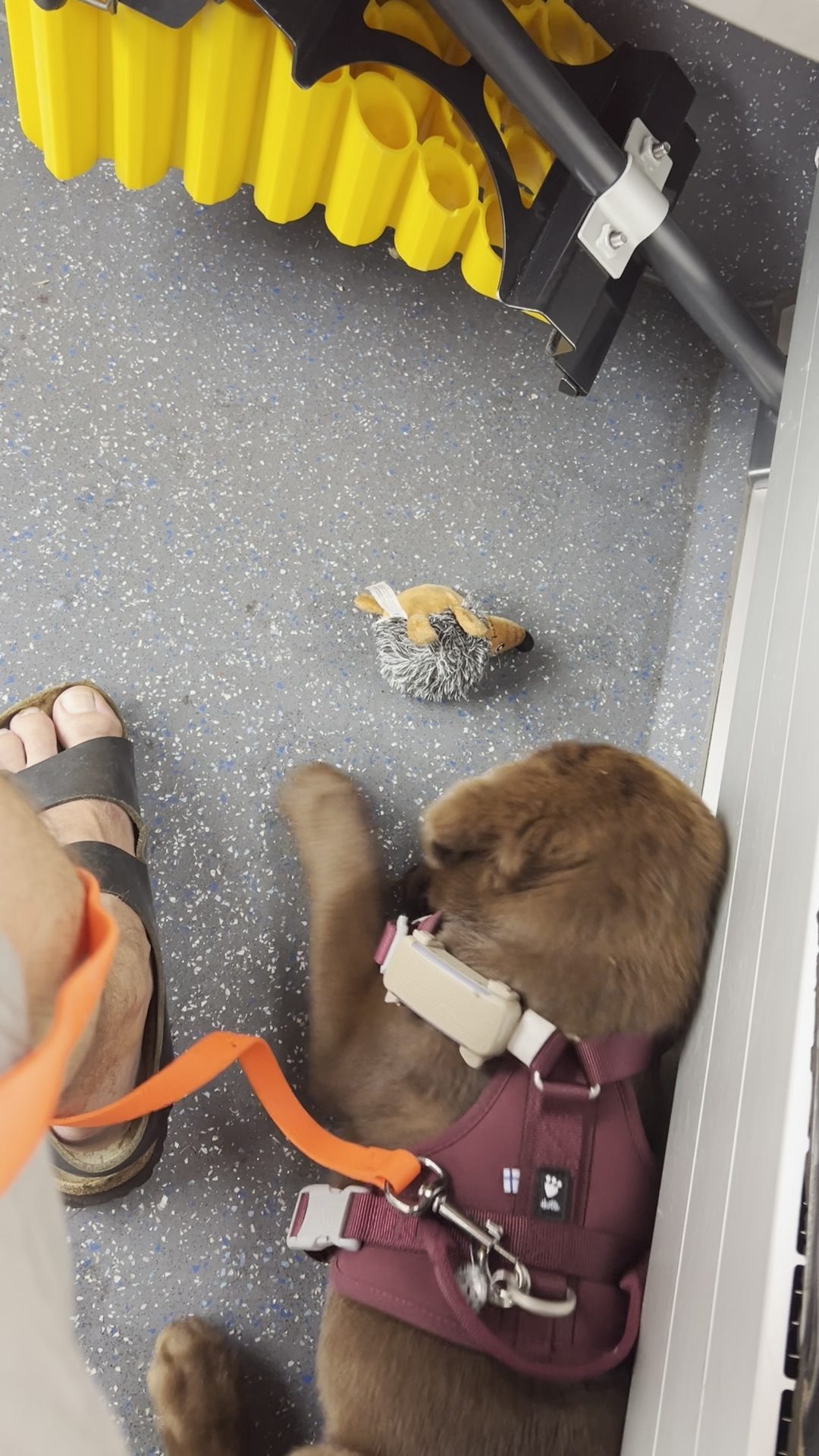
We didn't bring one for Jaina. For five minutes it's bulky, and setting it up becomes more stressful than anything else. We did always have a small toy or something to chew to keep her calm.
Pick a spot with room
We always sat where the dog had enough space not to feel trapped. For example, in a block of four free seats, with the dog in the middle. Since I was usually with my wife, Jaina ended up between the two of us: she felt protected but could still watch what was going on.
Praise them
It's their first bus ride, so it should be a good memory. Praise them, reward them. And good news: people usually find a puppy on a bus cute and funny. The reactions will be friendly, and that's part of the positive experience too.
Watch out getting on and off
This is the trickiest moment. At some stops, the bus pulls up far from the kerb, leaving a real gap between the step and the ground. A puppy is a baby, still a bit clumsy. Carry them on and carry them off. That way they won't slip or fall through the gap, and won't link the bus with a bad experience.
For the first few rides, also avoid getting off at very busy stops in the town centre. Choose a quiet stop instead, or better still, one close to nature. Your dog will quickly realise the bus takes them to great places, and they'll happily hop back on.
Next: longer rides, then stations
Once short trips are no problem, gradually raise the difficulty:
- slightly longer rides;
- busier times with more people and more traffic;
- bigger train and bus stations, with crowds, announcements and trains.
Your dog will simply find all of this normal, because they got used to it bit by bit. These days, when we get on the bus with Jaina, she knows where to settle, she gets her little chew or her toy, and she's happy getting on and getting off. So are we.
Why start while they're young
The most important thing is really to do this while your dog is young. It's when your puppy is most adaptable, listens to you most and is least stressed. It's when they build their picture of what's "normal" in the world.
It's the same logic as with rain: a few positive experiences at the right time save you years of hassle. If that sounds familiar, I talk about it in my article on dogs that won't go out in the rain.
How Quest.Dog helps get your dog used to the city
In Quest.Dog, the app I built, the City family includes quests at train stations and bus stops near you. It's an easy way to remember to repeat these outings regularly, even once your dog is no longer a puppy, so buses and trains stay normal for life.
Quest.Dog is available on the App Store: search for "Quest.Dog". On Android, the app is still in beta. Leave your email on quest.dog to get access.
FAQ
At what age should you get a puppy used to the bus?
As early as possible, in the first few weeks at home. Jaina took her first bus ride at about two months and one week old, for a single stop.
Do you need a crate or a mat to take your dog on the bus?
Not necessarily. For short rides, a small toy or a treat is often enough to keep them calm. A crate can make getting on harder for little benefit.
Are dogs allowed on buses?
It depends on the transport company and the country: some accept dogs on a lead, others require small dogs to be in a carrier, a muzzle or a ticket. Check with your local operator before the first ride.