Should your puppy sleep in your bedroom? Yes, here's why
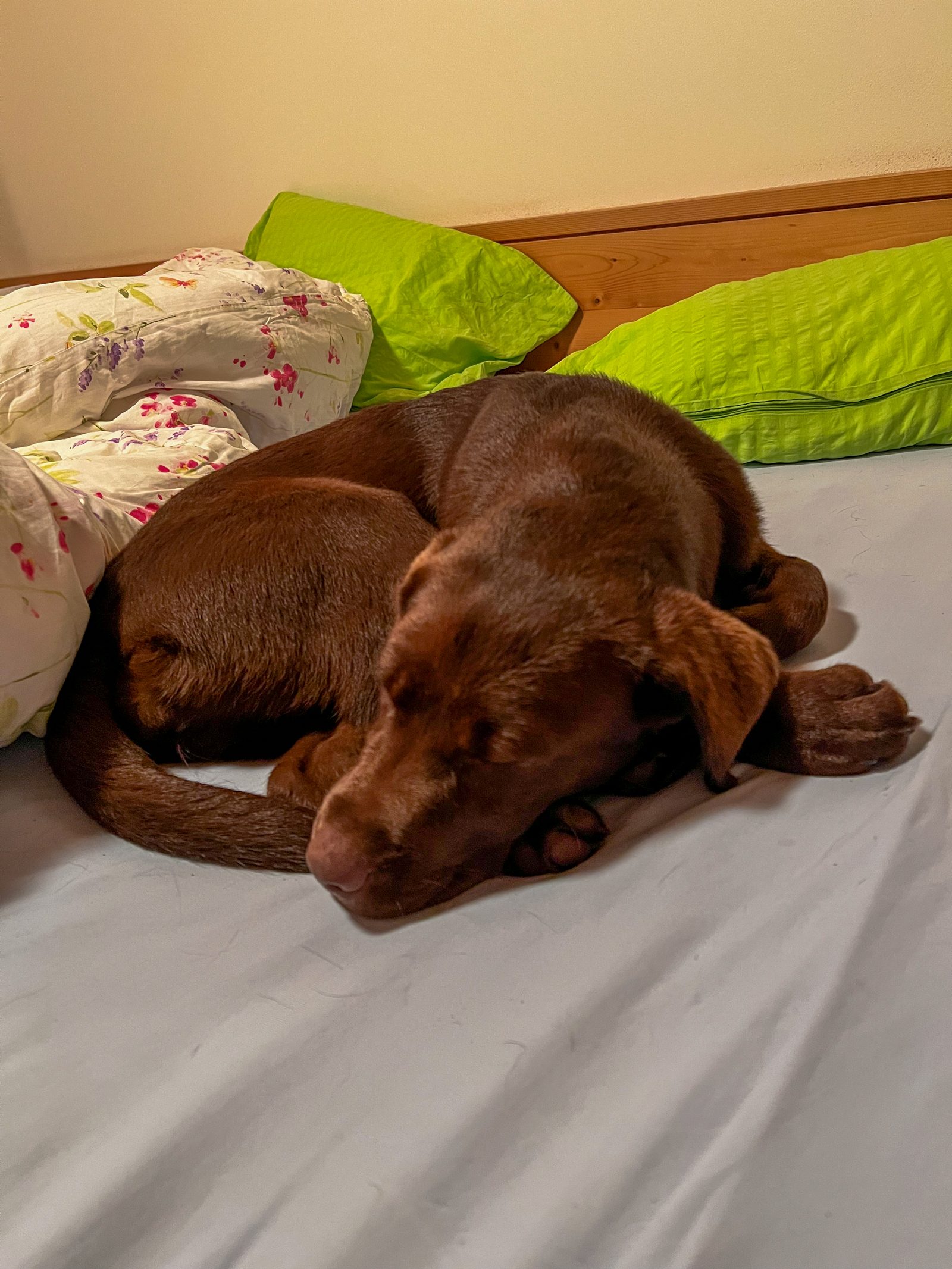
One excellent piece of advice I got from the course and videos of Tony at Esprit Dog, a French dog trainer, was to sleep with your puppy. Not necessarily in the same bed, but at least in the same room, during the first few weeks.
Jaina is the first puppy my wife and I have adopted. I had no idea how important this was. Here's why, in our experience, it makes a real difference.
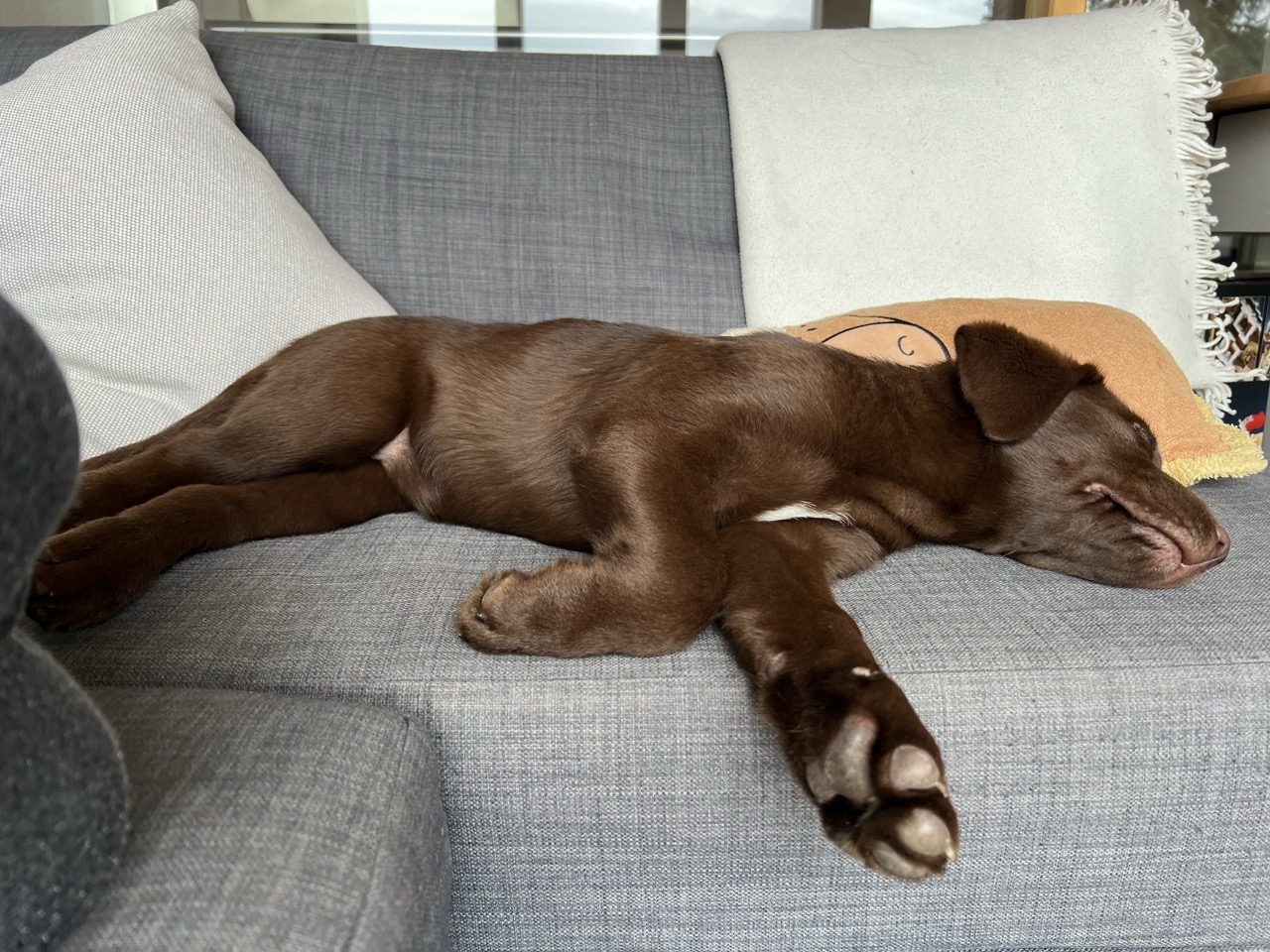
1. Reassuring a baby who has lost everything familiar
When your puppy arrives, don't forget they've just been separated from their mother and siblings. They land in an unfamiliar place where they have to build a new family, new contacts, new games. It must be quite traumatic for a little dog. That doesn't mean you shouldn't do it, or nobody would have dogs. But suddenly, they've lost everything familiar.
It's up to you to show them: "I'm your new family. I'll guide you, but I'll also feed you, cuddle you, play with you, travel with you, protect you."
If you leave them alone outside the bedroom for ten hours every night, the poor thing may struggle to build that bond. I'm not a dog trainer, but it seems pretty logical.
In the bedroom, not necessarily in the bed
Important detail: sleeping with your puppy doesn't mean in your bed. On our side… it's a battle we lost.
The plan was for Jaina to sleep in her little bed next to ours. She's with us, we can hear her, see if something's wrong, reach out to stroke her, and know if she needs to go out.
Normally, if I understood the technique correctly: your puppy climbs onto the bed, you say no, pick them up and put them in their own bed: "Your place is here." And repeat.
Was it a lack of consistency on my part, a stubborn Jaina, or a big mix of both? Probably the mix. Above all, I think she understood that I didn't mind having her in the bed at all, and even found it adorable. There was probably a lack of conviction when I asked her to get down.
And even with three and a half weeks off, you still need some sleep. It's 2 am, she's already woken you, you go out for a pee, come back to the bedroom, she climbs on the bed, you put her down, she cries, she climbs back up… After about a week, I told my wife: "This is a battle I'm willing to lose."
A mistake? Maybe. A trainer would probably say we should have done it differently. Either way, my wife is now delighted to have Jaina with us, even though she takes up an impressive amount of space, lying diagonally across the middle of the bed. And she doesn't necessarily stay all night: sometimes to fall asleep, sometimes she joins us in the middle of the night, otherwise she sleeps in her own bed or on the floor next to us.
One note: our bed is right at floor level (just a mattress), so she could climb on from day one. With a raised bed your puppy can't reach, they'll probably get used to sleeping beside it.
2. A controlled space, less mischief
You can't expect a baby dog who's just arrived to know all the rules. Outside our bedroom, there are two sofas, a computer with cables, a printer… In short, a home people live in.
You can't expect a puppy to know what they can and can't chew, and to stick to those rules all night, even when they wake up bored.
In the bedroom, the environment is controlled. They're less likely to get into trouble, so less likely to wake you, and you won't find your living room devastated in the morning.
3. Toilet training
If your puppy sleeps in the living room or another room, you won't know when they need to go out, even if they try to tell you.
When Jaina woke up needing to pee, I heard her, we went straight out, and all was well. In another room, I wouldn't have heard her. She would have peed indoors, and so learned to do it in the wrong place, which slows down training. For toilet training, it's one of the benefits that helped me most: I also cover it in my article on the first weeks with a puppy.
4. Keeping an eye on the heat
This one had completely slipped my mind. Jaina came home in May, shortly before a heatwave. And a little dog can really suffer in the heat.
Our bedroom is right under the roof, and without air conditioning it was easily 27–28 °C (81–82 °F) all night. On the first really hot night, I could tell she was sleeping badly: she was panting, breathing too hard, couldn't settle.
We found two solutions:
- sleeping one floor down for a few weeks, less exposed to the heat, where it was about 5 °C (9 °F) cooler. She immediately slept like a log;
- cooling vests: vests you soak, wring out a little and put on your dog. They lower body temperature, and it was night and day: within ten minutes, she was asleep.
If she'd been sleeping in another room, I might never have noticed. And if your puppy is panting heavily and won't settle no matter what, don't hesitate to call your vet.
And later on?
Don't hesitate to sleep with your puppy, at least in the same room if you don't want them in your bed. Later, once your dog is calm and you feel there's no more risk, you can decide to leave the door open and let them wander wherever they like.
And once the nights are calmer, Quest.Dog can help you fill their waking hours with varied outings near home. Quest.Dog is available on the App Store: search for "Quest.Dog".
FAQ
Where should my puppy sleep on the first night?
In your bedroom, in their own bed next to yours. They feel reassured, you hear them if they need to go out, and they can't get into trouble elsewhere in the house.
Should I let my puppy sleep in my bed?
That's a personal choice. The most important thing is that they're in the same room as you. If you don't want them on the bed, be consistent from day one; a raised bed helps a lot.
My puppy pants at night, are they too hot?
Possibly, especially in summer or in a room under the roof. Cool the room, offer a cooler spot or a damp cooling vest, and see your vet if it doesn't settle.